


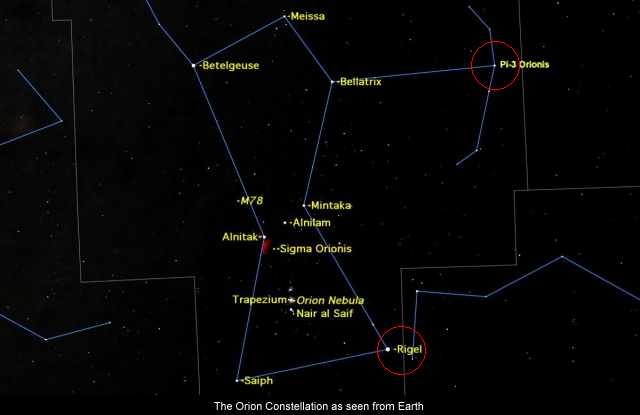
  Astrographically, the Rigel star system resides just on the Coreward side of the Orion Arm of the galaxy, a belt of ionized hydrogen rich with large bright stars. With equal access to both sides of the Arm, the Rigel system resides almost exactly between the Federation and the Klingon Empire. Coreward lies the Triangle and beyond that the Romulans. The Rigel system comprises three stars, 773 light years from Sol. The name Rigel comes from an Arabic phrase, "Rijl Jauzah al Yusra," which means "the left leg of the giant", referring to the constellation Orion, of which Rigel is a part. Rigel is known to astronomers as Beta Orionis. Rigel A is the primary star, and Rigel B and C orbit each other a great distance from Rigel A. In a region poor in planets, Rigel has an embarrassment of riches: 16 planets, more than half of them habitable. Archaeological evidence shows that hundreds of spacefaring races have visited Rigel for many thousands of years, and a few have claimed it; it is prime real estate in a commanding location. The Orions arrived in the Rigel system 200,000 years ago, and for more than a thousand years, it has been under their dominion. Although Rigel is not the sole reason for their power, it shaped them and helped them to achieve all they have. The system consists of the primary RigelA, sixteen planets, an asteroid belt, and is home to the Orion, or Rigellian, colonies. The Rigel system is part of the most densely populated section of the Milky Way Galaxy. The native species living in the system include the Chelarians of Rigel III (Chelar), the Hill People of Rigel IV, the Rigelians of Rigel V, the Kalar of Rigel VII (Kolar), the Orions of Rigel VIII (Botchok) and the trade world Rigel X. The Rigellian hypnoid and Rigellian ox are animal species native to the Rigel system. Ratana trees are also from this system.
Rigel II would be unremarkable except that Starfleet vessels are allowed to monitor the Rigel System from orbit around this planet, though on highly restricted routes with strict limitations on how they may act. They may not intercept or follow ships in the system; they can only run identity checks and get an idea of Federation traffic. Ships on monitor duty here spend months doing nothing but waiting, avoiding diplomatic errors, and keeping tabs on radio traffic, ship passages, and the prominent rumors. Because of the boredom of such duty and the planet's poor R&R facilities, Rigel II has many times earned its nickname "Security's Playground".
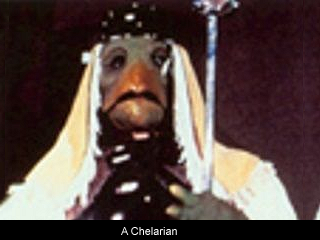 Nevertheless, early Chelarian civilizations took their role as divine emissaries seriously. The Chelarians quickly established a system of communications between their communities. This system encouraged trade and prevented war. In time, the Chelarians boasted a sophisticated network of interdependent communities, creating large states without developing the imperialistic mindset common to most other cultures. Consequently, Rigel III was ripe for the picking by the various Orion empires that arose in the Rigel system millennia ago. Despite their broadmindedness, the Chelarians proved unruly subjects, launching several rebellions against Orion rule. Eventually, the Orions abandoned Rigel III (historians still debate why) and left the planet to the Chelarians. The Federation first visited the Rigel system in 2189 and the Chelarians, unlike the Orions, welcomed it to their homeworld. Their pacific and cosmopolitan culture greatly impressed the Starfleet contact team, which recommended Federation membership to Rigel III in 2203. Admitted in 2206 over the objections of the Orions, the Chelarians have been staunch, if low-key, members of the Federation ever since.
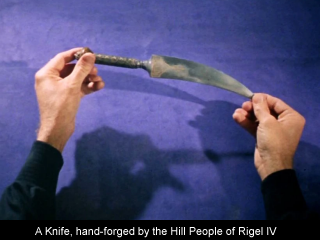 
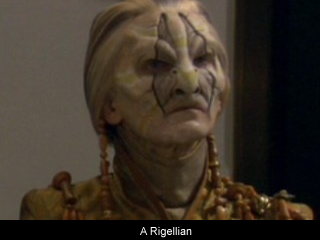 How the nomads manage to survive on so little has fascinated scientists for centuries. For all this study, they remain uncontaminated and aloof, contemptuous of outsiders. They live as sparely as the desert; they have no compunctions about abandoning their weak or unfit, or about disposing of the hapless, helpless traveller who makes the mistake of asking their aid. Those who cannot exist in the desert on their own are worse than a burden; they are unclean and unfit to survive. In appearance, the nomads are very striking: tall, slender humanoids, usually wearing dust-colored hoods, robes and masks under which they have elaborate facial tattoos. Their ears and eyebrows are elongated and pointed, through neither the Vulcan nor the Romulan tongue is similar to their language. As they are a cold-bloodedly vicious, primitive, and unforgiving people, only experienced contact teams should attempt to approach them. Some scientists have theorized that the nomads are the descendants of "weed-outs" from the Preservers. Or, they could be a lost Vulcan or Romulan colony's survivors, a living relic of prehistoric times.
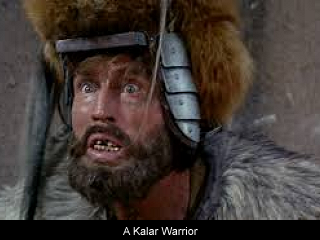 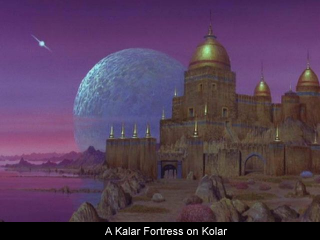
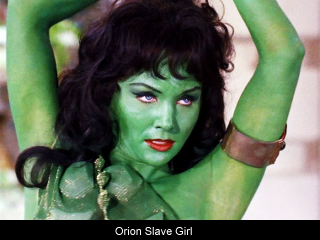 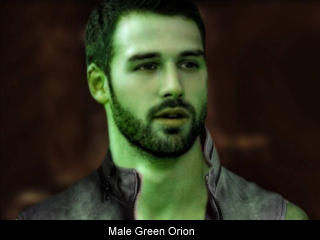 With the Orion diaspora from Pi-3 Orionis some 200,000 years ago, the Caju that would come to settle Botchok had been particularly hard-hit by the climate damage done to them on their ancestral homeworld. Native to portions of Orion with a far more delicate ecology, the Bilat Caju in particular intended to see their resources preserved. Botchok was settled in such a way that minimized the damage to the native environment as much as possible. Unfortunately, thier technology at the time was not completely up to the task. With a gravity of 1.9g, a surface 59.2% water, a warm dry temperate climate (average temperature 19.2° Celsius), and twin moons, Botchok is a rather pleasant Class M world. Its 5.8 billion people live comfortably in the many wallmanaged cities and serni-dispersed agricultural communities scattered over the globe. Manicured to an exquisite perfection, Botchok is almost completely free of any hazardous plants, animals, diseases, or inclement weather. Nevertheless, Botchok's climate and a surprising amount of its ecology are artificially maintained at a staggering cost. Centuries ago, the plants was terraformed with inferior technology and more zeal than care, and ever since the Orions have been kept busy correcting numerous oversights and natural imbalances. Perhaps only five percent of all life-forms on the planet—including microbes—are native; the rest have been imported of altered. As nearly all its natural resources have been depleted, Botchok must import even timberand oil to supplement its own meager stocks, most of which are salvaged or recycled. More than any other world it depends on offworld imports. If for any reason those imports were cut, the biosphere management system would fall within days and, in less than a year Botchok would become a half-frozen, lifeless wasteland. Botchok produces no goods or raw materials to pay for the imports it lavishly consurnes. Primary exports arts information wad cultural artifacts, including books, tapes. entertainment (live and canned), and expertise. A large portion of its population are authors, artists, entertainers or specialists, whose earnings are a large portion of the planet's total income. A liberal tax policy encourages such people to immigrate from other worlds, and various local govenments even offer package deals to would-be lucrative residents. The cultural and spiritual career of Orion civilization, Botchok is crowded with shrines, monuments, statuary, memorial parks, museums, temples, and other fragments of 200,000 years of history. Perhaps three billion tourists a year came to enjoy them and the countless festivals, celebrations, services, remembrances, and tours attendant to them. Many journey on business to the sumptuous convention carriers and hotels (many with casinos).
To make it easier to land more ships, someone once planed away all the hills and valleys and eliminated any trace of life on its surface. Everything on the planet-including the Trade Halls, the underground hotels, the massive docks, unbelievable junkyards, and the glass-hard surface itself—is artificial. Even the air is mechanically recirculated and processed. Nevertheless, engine fumes and industrial pollution combine with the ever-blowing dust to make the atmosphere unbreathable.
Much of the ore mining takes place in heavily fortified installation just beneath the most stable parts of the planets surface, as the volcanic surface activity and almost routine meteor showers make any structure upon the surface untenable. The fortified mining and mineral refinery installations are generally automated with little manpower deployed in this hostile environment. Nearly all the installations are operated from orbital colonial habitats circling the planet just beyond it's dense belt of asteroids. The planets thick tectonic plates are layered in chaotic fashion throughout the planets crust and core regions, making earthquakes also as deadly are seasonal orbital bombardment. Most modern installations upon the surface are equipped with seismic stabilizers and modified inertial dampeners to compensate for this ever active rock.
Any matter which touches the superstring is neatly sliced by it. Even extremely refractory materials like duranium or even diburnite are instantly cut by the superstring. Some scientists believe that the Architects who created the Rigel system used this super-strong to help them construct the planets in the system. The superstring forms a loop approximately 60,000 in diameter. During periods of major sunspot activity on Rigel a temporal anomaly occasionally flares up in the region within the loop. Traveling through this anomaly leaves the travelers near the superstring during another period of sunspots some time in the past.
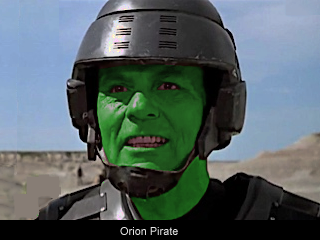 Modern-day Orion pirates are not as desperate or obvious as they used to be. Only after many years of quiet relocation did it became apparent that most property owners in Rigel BC were families of pirate lineage, whose holdings were generally secret and always distant in space, who had a great deal of money, and who were cordial only with one another. Rich and aloof, this new class of pirate-landowners had established themselves as gentleman planters and genteel squires. Here are no spacer's bars or hard-eyed men lounging around grimy spaceports. Visitors to Avali and Ugoan frequently remark on the worlds' peacefulness. The most efficient police forces money can buy ensure that the tourists are not frightened off and that the landowners' privacy is not compromised. When it occurs, the occasional incident is quietly handled beyond the public's view. No one knows what happens to trespassers&mdsh;no one dares ask.
|





















