

   Following the largely successful tests of the Enterprise XCV, the directors of the New Cunard Cruise Line decided to use the design of the coloeopteric drive system to power a luxury liner to allow Humanity to join the galaxy at large. The designers behind the Declaration class were not interested in what had been the mind-set of UESPA's engineers and were more amenable to the Vulcans' way of thinking. They were interested in building a passenger liner, not a warship, and the methodical pre-planning of the Vulcans was more amenable to the pre-packaged nature of cruise ship operations.
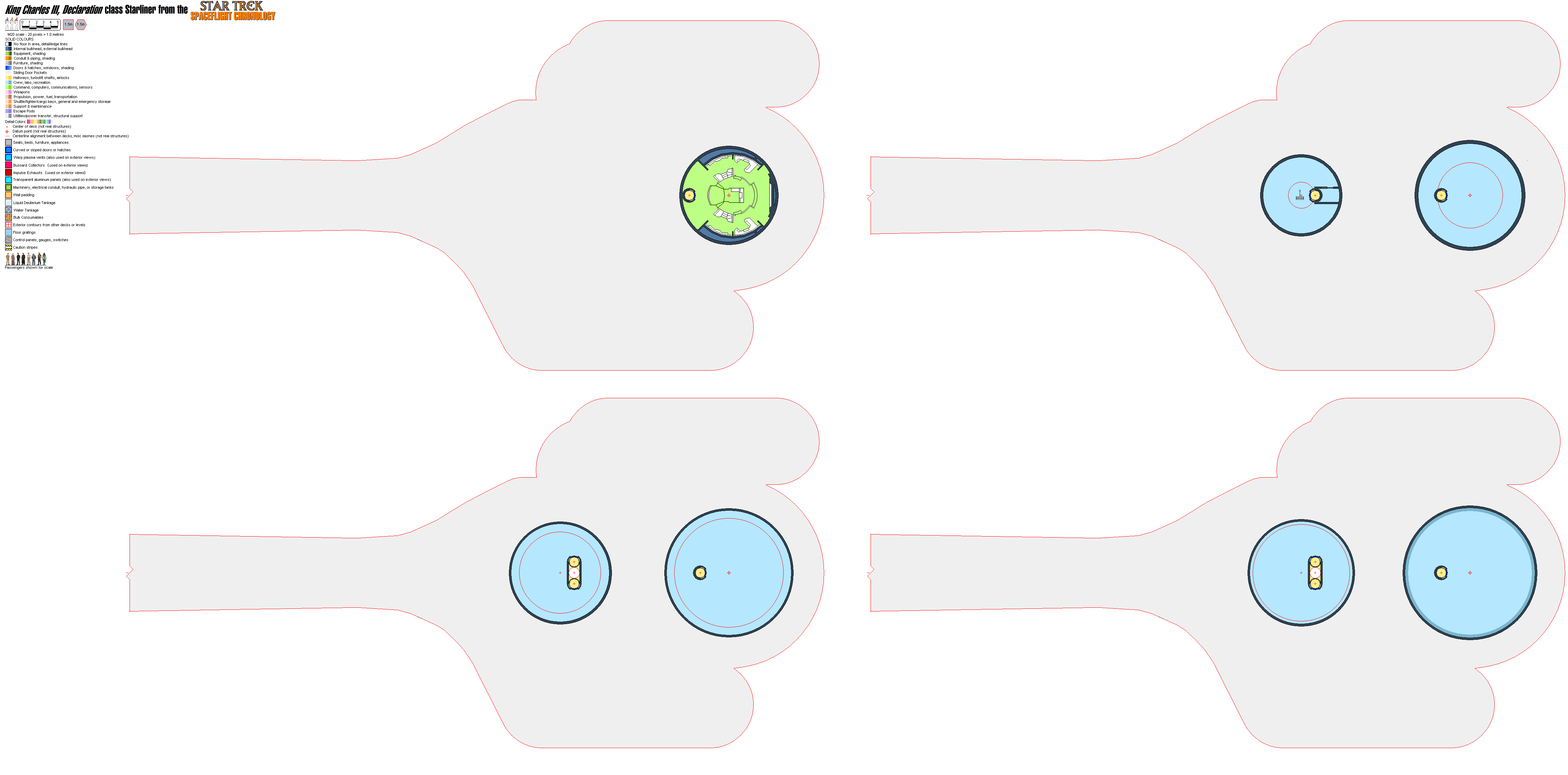
At a length of 300 metres (984') with a deck to ceiling height of 2.5 metres (8'2.4") and deck to deck being 3 metres (9'10.08"), the ship is actually quite large, having sixteen decks. Some of them are awkwardly shaped, but can be used for storage, maintenance and equipment spaces or for lifeboats. The three deck high "neck" between the Engineering section and the forward Passenger decks has two decks of lifeboats and a lower deck with liquid storage. Lifeboats are also stationed on Deck Seven. Access between decks is via a turbolift system. The portside tubular section houses a swimming pool and an arbouretum, while the starboard one houses luxury cabins. There are five classes of cabin, each capable of housing two passengers. Class A cabins have a double fold-out bed/sofa. Class B cabins have twin beds and are slightly smaller. Class C cabins are with four beds and Class D (or Steerage) cabins are smaller with two sets of bunk beds. Suites are twice the size of Class B/C cabins, have a bedroom with a king-size bed and a parlour. Class A through D have "efficiency" style freshers, while Suites have standard style bathrooms with showers.The ship carries 250 seven-place lifeboats, well over the number required. 
      |
